Panji Gong Agung: From Traditional Instrument to UNESCO Cultural Heritage

Kelanawisata/abw
|
13 Oktober 2025
|
841x Dilihat
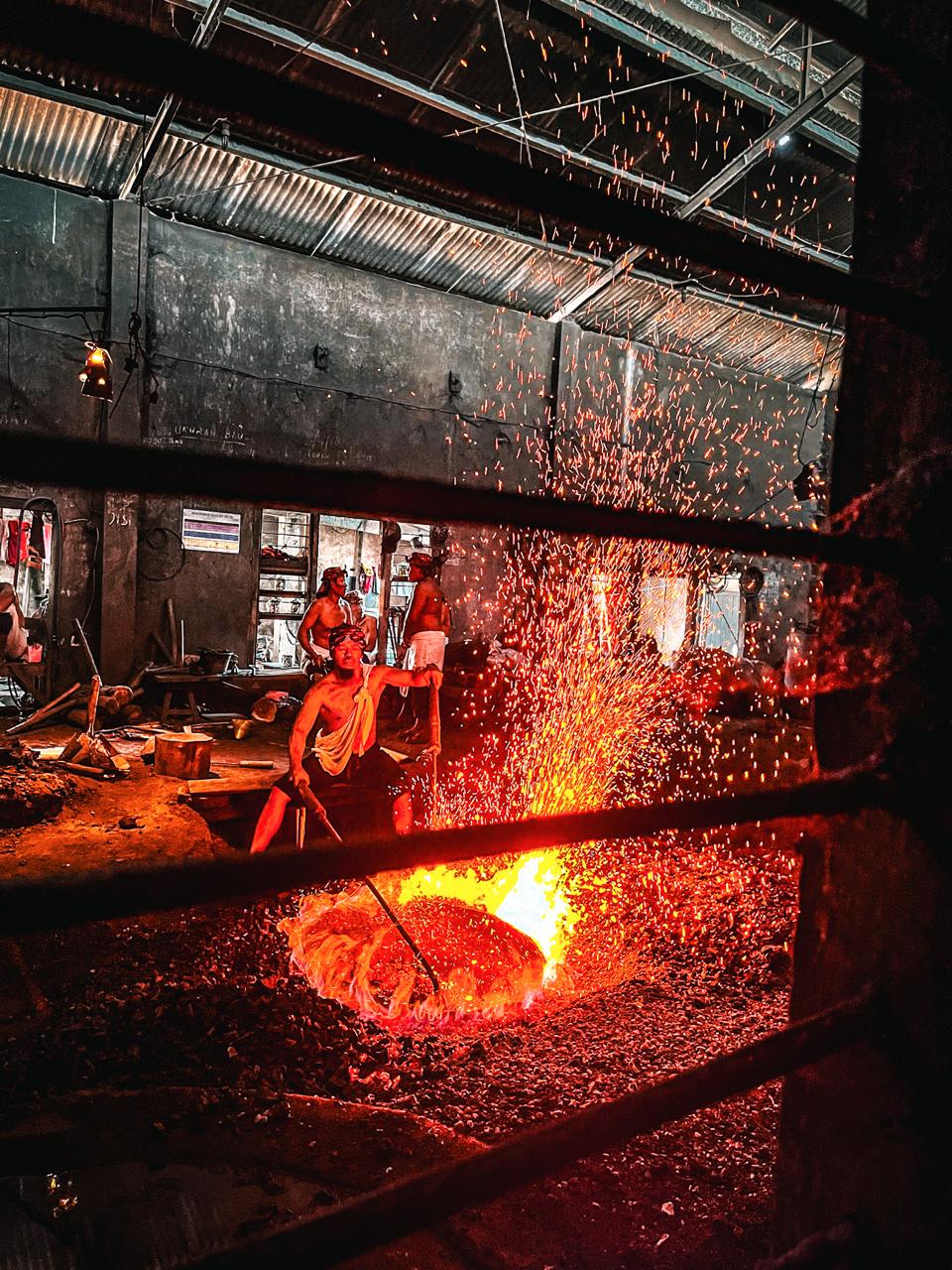
kelanawisata.id, Sukoharjo – Wirun Village, located in Mojolaban District, Sukoharjo Regency, stands as a testament to the long journey of preserving Indonesia’s cultural heritage. Since 1954, Panji Gong Agung has been established as a center for traditional Javanese instrument production, initiated by Mr. Sanjaya, who inherited the art of gamelan-making from the Mangkunegaran cultural environment.
To this day, Panji Gong Agung employs a number of skilled artisans (besalen) who carefully produce various gamelan instruments. These include the gong, saron, bonang, gender, slenthem, and kendang. Their products not only fulfill domestic demand but have also reached international markets, with exports to countries such as Japan, the United States, and Italy.
The uniqueness of Panji Gong Agung’s gamelan lies in its production process, which still follows traditional methods, complete with rituals passed down through generations. As a result, a full set of gamelan can reach remarkable prices, ranging from Rp500 million to Rp1 billion.
The high quality of sound produced by these instruments has made them highly sought after, even by prominent figures such as President Soekarno and President Soeharto. This reputation has contributed to global recognition, culminating in the designation of gamelan as an Intangible Cultural Heritage (ICH) by UNESCO in 2021.
📍 Desa Wirun, Mojolaban, Sukoharjo, Jawa Tengah


