Preserving Historical Heritage: Wonosobo Promotes Nationalism and Cultural Preservation

Disparbud Kabupaten Wonosobo
|
28 Juni 2026
|
211x Dilihat
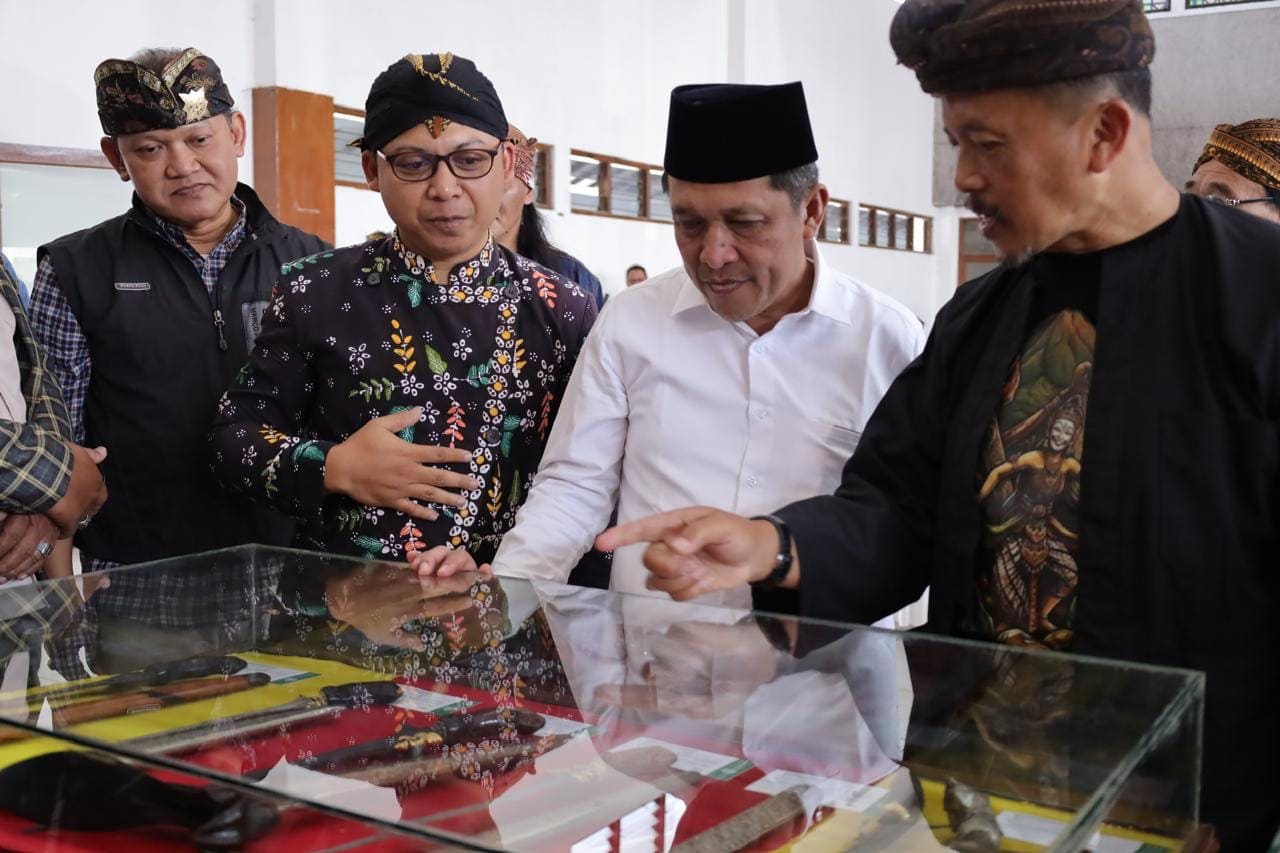
Kelanawisata.id, Wonosobo – The commitment to preserving the cultural heritage of the Indonesian archipelago continues to be championed in Wonosobo Regency through the 2026 Exhibition of Keris, Antiques, and Precious Stones of the Indonesian Archipelago, which will take place on June 16–18, 2026, at Sasana Adipura Kencana in Wonosobo. Under the theme “Traces of Heritage from the Land of the Gods,” this event serves as a platform for cultural preservation, the strengthening of national values, and an effort to promote the development of the region’s tourism and creative economy sectors.
More than 100 participants—including keris enthusiasts, antique collectors, cultural observers, cultural figures, and heritage preservation communities from various regions across Indonesia—took part in the exhibition. A diverse collection of keris, heirlooms, antiques, and precious stones—each possessing significant historical, artistic, and philosophical value—was displayed to the public as a form of education and appreciation for the rich heritage of the Indonesian archipelago.
The exhibition, held to coincide with Bung Karno Month, served not only as a gathering for cultural activists but also as a means to introduce historical and national values to the younger generation, encouraging them to better understand and cherish the nation’s ancestral heritage.
The Regent of Wonosobo, H. Afif Nurhidayat, S.Ag., expressed his appreciation to the Djawa Djadoel Community of Wonosobo Regency and all parties who contributed to the organization of the event. According to him, cultural preservation is an important part of maintaining national identity while also enhancing the region’s appeal.
“This exhibition does more than simply display heirlooms; it also revives the historical legacy, noble values, and wisdom of our forebears that have shaped our national identity. Through events like this, the public can gain a deeper understanding of the cultural heritage that has long been an integral part of the journey of the Nusantara civilization,” said the Regent.
Furthermore, the Regent emphasized that progress in the tourism sector cannot be separated from the strength of the culture and traditions that thrive within the community.
“Events like this are key drivers of regional tourism development. Beautiful natural scenery must be complemented by well-preserved culture, living traditions, and a thriving creative economy. These three elements form the essential foundation for building sustainable regional appeal,” he continued.
According to the Regent, the theme and exhibition catalog of “Traces of Heritage from the Land of the Gods” are highly relevant to Wonosobo’s character, which is rich in history, tradition, and local wisdom. Therefore, it is hoped that similar events can continue to be held on an ongoing basis as a space for cultural exchange from various parts of the archipelago, as well as an educational tool for the community.
The momentum of Bung Karno Month, which serves as the backdrop for this event, is also seen as a reminder of the importance of upholding the spirit of nationalism and national unity.
“Pancasila has proven itself to be an ideology capable of uniting the Indonesian nation. Amid various national and global dynamics, we remain standing as a united nation. One of the forces that upholds this unity is the culture that we continue to nurture and pass on to future generations,” he emphasized.
Meanwhile, the Chair of the Exhibition Committee, H. Zaid Suryono, explained that this event was organized as part of the Bung Karno Month commemoration and as an effort to foster the public’s love for the nation’s history, culture, and noble values.
“Bung Karno Month serves as an opportunity to commemorate the spirit of struggle, nationalism, and the noble values bequeathed by the nation’s founders. Through this exhibition, we aim to encourage the younger generation to better understand and appreciate our cultural heritage as an integral part of Indonesia’s national identity,” he stated.
Zaid also noted that compiling the exhibition catalog is part of an effort to document and serve as a medium for cultural education. According to him, the keris is a noble cultural heritage of the Nusantara that not only possesses high artistic value but also embodies the philosophy, history, and moral messages passed down by our ancestors.
“Every keris blade holds meanings about life, honor, courage, and wisdom that we should all preserve together. Through this catalog and exhibition, we aim to create a space for cultural appreciation while encouraging the public—especially the younger generation—to better understand and cherish our nation’s ancestral heritage,” he explained.
He added that the theme “Traces of Heritage from the Land of the Gods” represents the long journey of the Nusantara culture, which is rich in spiritual values, noble traditions, and local wisdom that remain relevant to this day.
On this occasion, Zaid also expressed his appreciation to the master craftsmen, keris collectors, cultural figures, cultural enthusiast communities, the entire organizing committee, and all parties who supported the exhibition.
“We would like to thank everyone who has contributed their energy, ideas, and prayers to make this event possible. We also thank the visitors who attended and helped enliven the exhibition. May this event bring benefits, broaden cultural understanding, and serve as a concrete step toward preserving and caring for our ancestral heritage for future generations,” he said.
According to Zaid, the presence of more than 100 participants from various regions across the archipelago—including those from outside Java—demonstrates the public’s high level of enthusiasm for cultural preservation. In addition to providing educational and historical preservation benefits, this event also opens up economic opportunities through the formation of community networks, the trade of collectibles, and the development of culture-based creative industries.
Through the 2026 Archipelago Keris, Antiques, and Precious Stones Exhibition, the Wonosobo Regency Government hopes to continue raising public awareness of the importance of cultural preservation. In line with the development of the tourism and creative economy sectors, cultural heritage is expected to become not only a source of pride in the past but also a source of inspiration and strength in building the region’s future, rooted in the nation’s noble values.
Writen by Dimas D. Pradikta, S.E., M.M - Adyatama Kepariwisataan dan Ekonomi Kreatif Ahli Pertama Dinas Pariwisata dan Kebudayaan Kabupaten Wonosobo
Curator & translate by kelanawisata.id


