Iki Opo: The Secret Behind Mataram’s Signature Dessert

Kelanawisata/frm
|
01 Oktober 2026
|
5x Dilihat
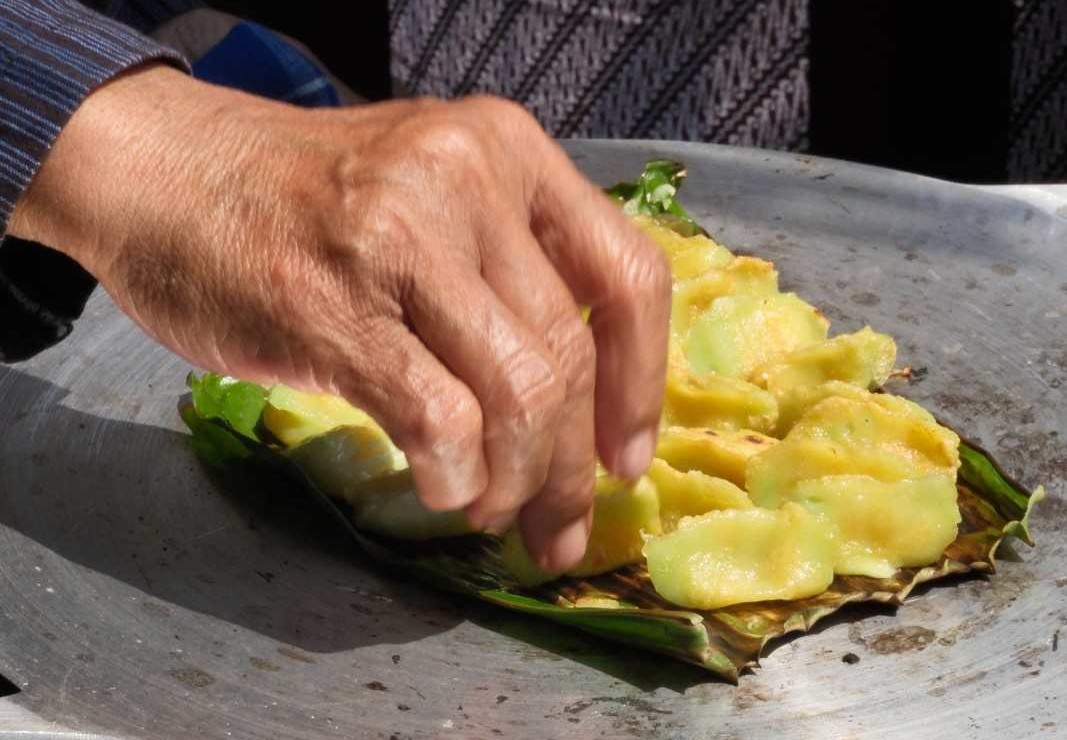
Kelanawisata.id, Yogyakarta—The fragrant aroma of slowly roasting banana leaves wafts from behind the old stone walls of Kotagede. On a clay mortar, small emerald-green balls appear slightly blackened by the heat of the fire, without a single drop of cooking oil to moisten them. This is a common sight in the corners of the Mandorakan village, where a lost culinary history now pulses anew in the form of a single kipo.
“Iki opo?”—which means “What is this?” in Indonesian—is a simple question said to be the origin of the name “kipo.” This tiny, sweet treat is not just an ordinary market snack; it is a fragment of history that had been buried by time before finally finding its way back onto the palates of food lovers in Yogyakarta. Its tiny shape and striking color always pique the curiosity of anyone seeing it for the first time.
The history of kipo stretches back to the 16th century, a time when the Islamic Mataram Kingdom was at the height of its glory. Sultan Agung, the great ruler of Mataram, is said to have been particularly fond of this treat as an accompaniment to his afternoon tea. However, as time passed and the center of power shifted, the kipo gradually faded from the archipelago’s culinary map—and at one point was even considered to have vanished entirely from the collective memory of Kotagede’s residents.
A Revival from the Hands of Mbah Mangun Irono
The silence of history was broken in 1946. It was Mbah Mangun Irono, a resident of Mandorakan Village, who broke that chain of oblivion. Through collective memory and meticulous effort in reviving ancient recipes that had long lain dormant, he brought back to life the aromas and textures that once graced the banquet tables of the Mataram kings. Thanks to his courage in reintroducing kipo to the wider public, Kotagede’s culinary identity was preserved.
To this day, kipo remains an exclusive culinary specialty of the Kotagede region. It seems reluctant to stray from its birthplace, thriving only in the narrow alleys and local traditional markets. This exclusivity makes it a top destination for travelers seeking an authentic flavor that cannot be found elsewhere in Yogyakarta.
Simplicity Wrapped in Banana Leaves
The secret to kipo’s deliciousness lies in the authenticity of its ingredients. The core of this cake is a blend of grated coconut and sweet palm sugar—often called enten-enten—which is then wrapped in a chewy glutinous rice flour dough. Its natural green color comes from the juice of suji or pandan leaves, imparting a fresh aroma that whets the appetite from the very first bite.
The cooking process also preserves a unique, time-honored tradition. Each kipo grain is placed on a banana leaf and then roasted on a clay mortar. Without using any oil at all, the direct heat from the bottom of the mortar creates a slightly crispy exterior while keeping the inside soft. This traditional cooking technique ensures that every kipo grain carries the timeless spirit of Mataram’s history.


