The Sultan’s Offering: The Kakung Gunungan in the Grebeg Kraton Celebration of the Yogyakarta Sultanate

Kelanawisata/frm
|
31 Desember 2025
|
977x Dilihat
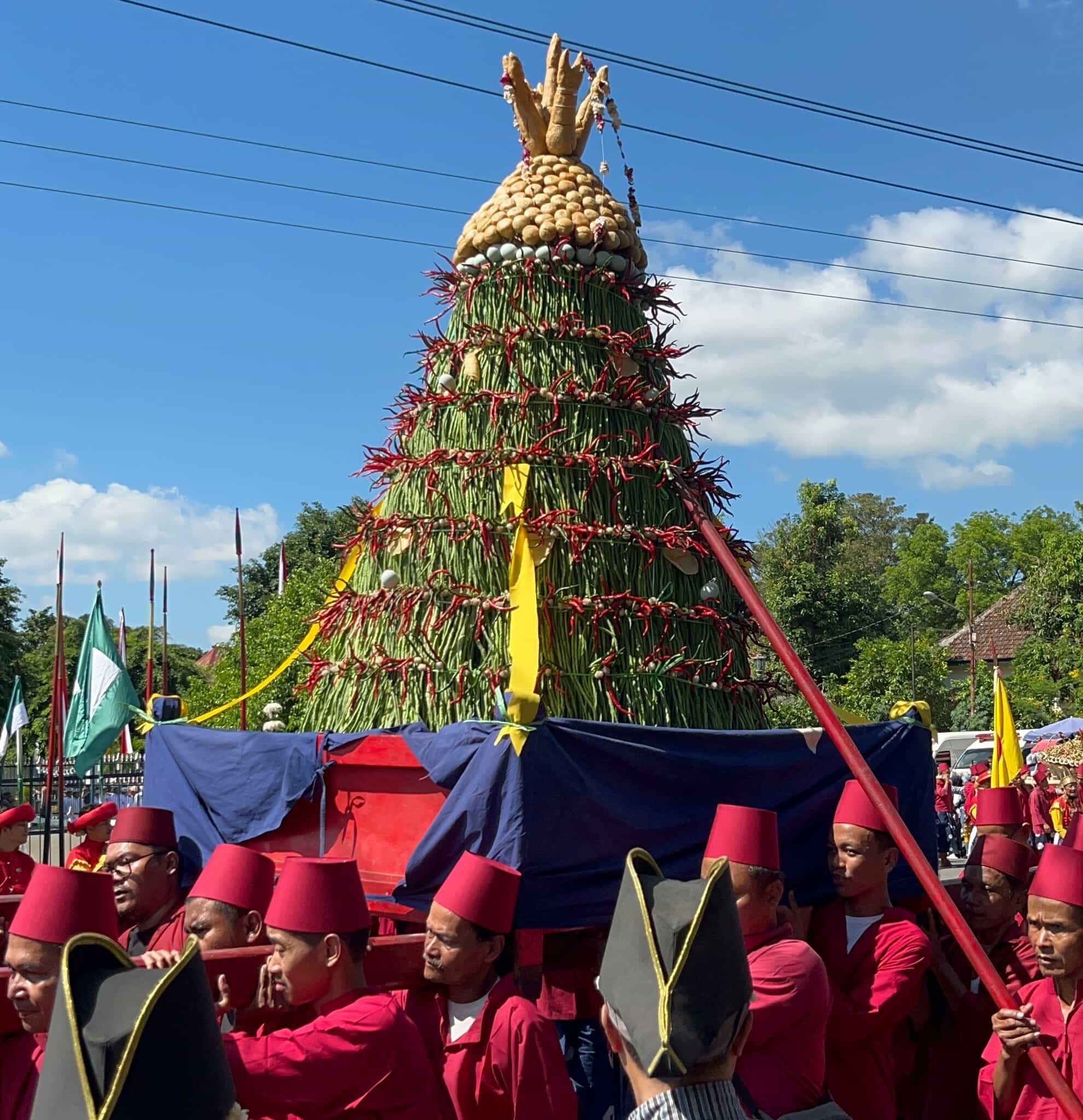
Kelanawisata.id, Yogyakarta — Travelers, have you ever witnessed the Sekaten gunungan? That is the atmosphere eagerly anticipated in the heart of Yogyakarta when the Sekaten celebration reaches its peak. The gunungan is unveiled during the Garebeg celebrations, held three times a year: Garebeg Maulud to commemorate the Prophet Muhammad’s birthday, Garebeg Syawal to celebrate Eid al-Fitr, and Garebeg Besar to mark Eid al-Adha.
Amidst the ranks of the royal palace’s gallant and fragrant soldiers, there is one colossal figure that captures everyone’s attention: the Gunungan Kakung. It is not merely a pile of agricultural produce; it is a symbol of a King’s love for his people and a prayer manifested in the form of food architecture. Let’s delve deeper into the meaning behind the grandeur of the Gunungan Kakung.
Traveling Friends, the Grebeg Sekaten tradition is not merely an ordinary folk festival. Its historical roots run deep into the early days of the Yogyakarta Sultanate. Sultan Hamengku Buwono I initiated this tradition as a means of spreading the Islamic faith.
Grebeg is held as the climax of the commemoration of the Prophet Muhammad’s birthday (Maulid Nabi Muhammad SAW). By blending rich Javanese cultural elements with Islamic values, Sekaten successfully unites the hearts of the community through the sound of the gamelan. The highlight of the Sekaten celebration is the Garebeg, featuring an offering of agricultural produce in the form of a Gunungan presented by the Palace. This is proof that harmony between religion and tradition can coexist.
Among the various types of Gunungan—such as the Gunungan Estri, Gepak, or Pawuhan—the Gunungan Kakung (Male) is always the star attraction due to its largest size and towering height. Its sharply tapered shape symbolizes the dignified nature of the Javanese knight, while also serving as a symbol of the lingga or masculinity that brings fertility.
This gunungan has a framework called a jodhang and is decorated with great detail. Its peak is usually adorned with salted eggs and red chili peppers arranged in such a way as to symbolize a blazing fire or the spirit of life that never dies out.
If you look closer, this Gunungan Kakung is “built” from an abundance of local produce. Long beans are arranged in a circle, symbolizing a long life and an unending flow of prosperity. Red chili peppers and vegetables signify the natural wealth of the Mataram region. Rengginang and salted eggs are ready-to-eat foods that symbolize prosperity and the sultan’s readiness to provide for his people’s food needs. Kacu (small cloths) are often tucked between the layers of the gunungan as decorations. Additionally, Pelokan—sometimes containing omelet-based dishes called pelokan—symbolizes the essence of life.
All these materials are arranged using intricate techniques and immense patience by the abdi dalem, transforming them into an edible art installation. The moment most anticipated by tourists—and perhaps also by Kawan Kelana—is Ngalap Berkah, or the tradition of scrambling for the gunungan. After the gunungan is blessed by Kyai Pengulu at the Gedhe Kauman Mosque, the tranquility of the prayer gives way to an extraordinary commotion.
There’s something unique here, Kawan Kelana. Many locals believe that every part of the gunungan—even just a single long bean or a supporting bamboo stalk—brings blessings and good fortune when taken home or planted in the rice fields.
Besides the Gunungan Kakung, there are actually other types of gunungan, such as the Gunungan Estri (Female), Gunungan Gepak, and Gunungan Pawuhan; however, the Gunungan Kakung always takes center stage due to its massive and majestic size. Travelers can witness the Gunungan Kakung during the Garebeg celebrations, which are held three times: Garebeg Maulud, Garebeg Besar, and Garebeg Syawal. The Gunungan is displayed in the courtyard of the Masjid Gedhe Kauman in Yogyakarta.


