Kotagede: A “Time Corridor” of Spiritualism and Romanticism from the Mataram Era

contributors/Faidah Kurnia Mukrianisa
|
25 November 2025
|
613x Dilihat
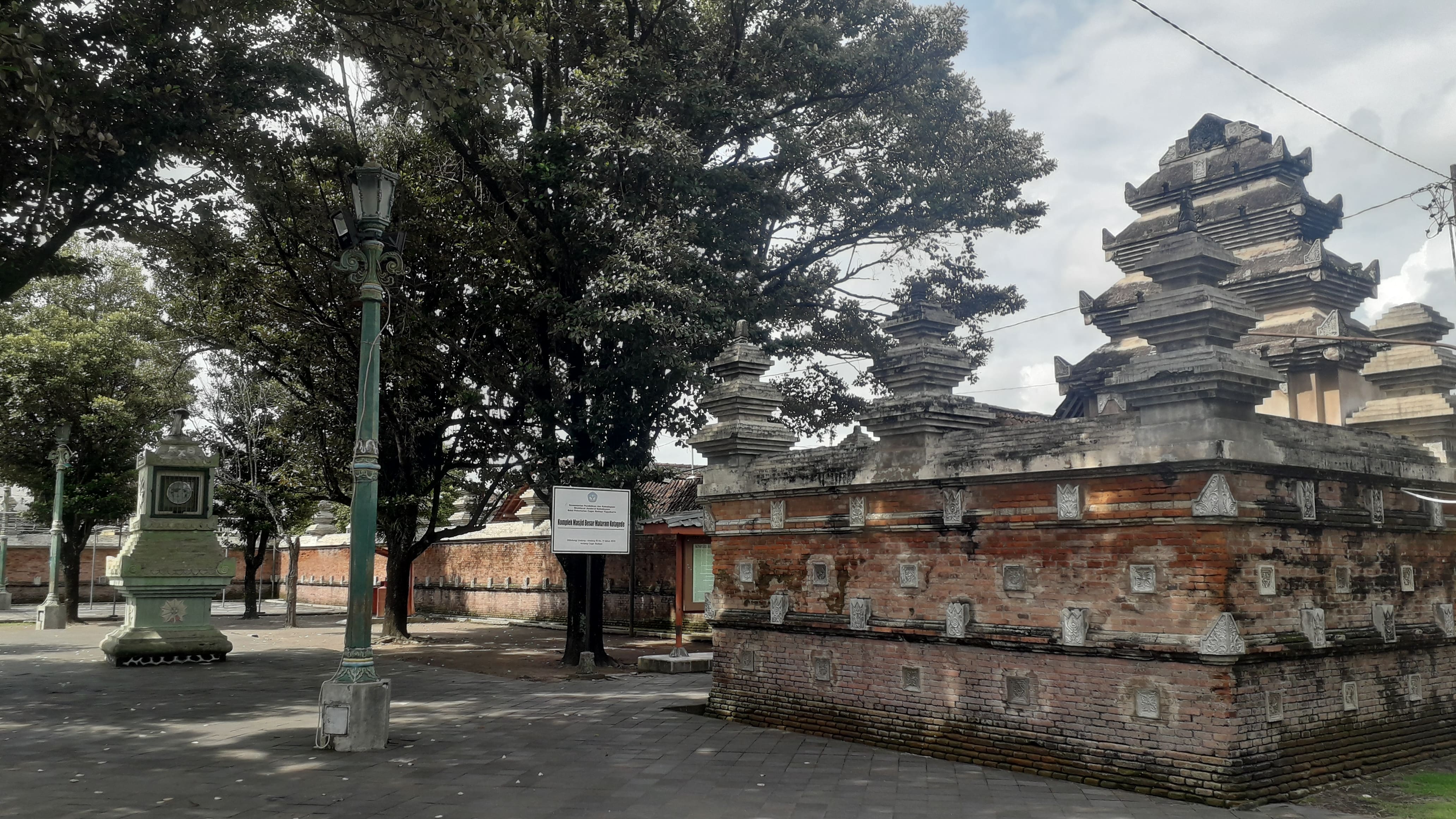
Kelanawisata.id, Yogyakarta - Under the scorching midday sun following the congregational Dhuhr prayer, the Great Mosque of Mataram stands majestically. Strong timbers are stacked upon one another, forming the sturdy framework of the main pillars and the interlocking beams of this beautiful mosque. A gentle breeze blows through, rustling the 17 small sapodilla trees lined up in its courtyard.
Seventeen—no more, no less—just like the number of obligatory prayer units in a day. The trees seem to whisper “sawu shuhufakum,” reminding the congregation to always keep their prayer rows tight. The Javanese people and symbolism are indeed two inseparable things.
Masjid Gedhe Mataram stands in the heart of Kotagede. In the past, Kotagede served as the first capital of the Islamic Mataram Sultanate. In its urban planning, Kotagede employed a layout principle known as “catur gatra tunggal”—a city area comprising a mosque complex, a market, a palace, and a town square.
The atmosphere of traveling through time in Kotagede is inseparable from the dominance of buildings featuring a blend of Javanese, Hindu, and Islamic architectural styles. This cultural fusion is clearly evident, particularly in the Masjid Gedhe Mataram complex and the royal tombs. The complex is surrounded by ancient brick walls, with paduraksa gates on several sides. These paduraksa gates are a type of gate also commonly found on Balinese temples.
Walking toward the tombs, one will easily encounter people wearing beskap and kemban. Here, many spiritual activities take place. Many people perform prayers at the mosque and pay respects at the tombs. It is not uncommon for visitors to meet “spiritually powerful” individuals who act as intermediaries for the fulfillment of prayers.
Exiting the mosque complex, you’ll encounter a labyrinth of European-style Loji houses belonging to successful local merchants. This residential complex adjoins the Kotagede Market. The houses and market buildings form narrow alleys with unexpected corners and turns. Along these alleys, there are also many gateways and sacred sites.
The stillness of the night enhances the romantic atmosphere. As we walk through these alleys, we are greeted by traditional kerosene lamps illuminating the passageways. This creates the impression of being in a fusion of the European Classical era and Ancient Javanese culture.
However, this sense of being squeezed in seems to have formed unstoppably. The wave of urbanization has put pressure on the historic buildings there, turning Kotagede into a densely populated area. The development of a new civilization has led to the loss of many heritage houses over the past 20 years. This is because the owners cannot afford to fund the maintenance of the buildings.
“I also like praying Friday prayers at the Gedhe Mataram Mosque, Ma’am. It’s like going back in time,” said the online motorcycle taxi driver who took me away from Kotagede. The experience of traveling through time is apparently the very essence of Kotagede. The historical value that seems to come alive is something priceless about this area. It’s such a shame if these remnants of civilization were to be lost, eroded by time.
Ditulis oleh Kontributor Faidah Kurnia Mukrianisa (Staf Kementerian Pariwisata RI)
Kurator: Rijal M (kelanawisata.id)


